May 12, 2026
AP Study Tips: How to Prepare for AP Exams Without Burning Out
Practical AP study tips. Build a calendar from your May exam date, use active recall and spaced practice, and pace your prep so you finish strong.
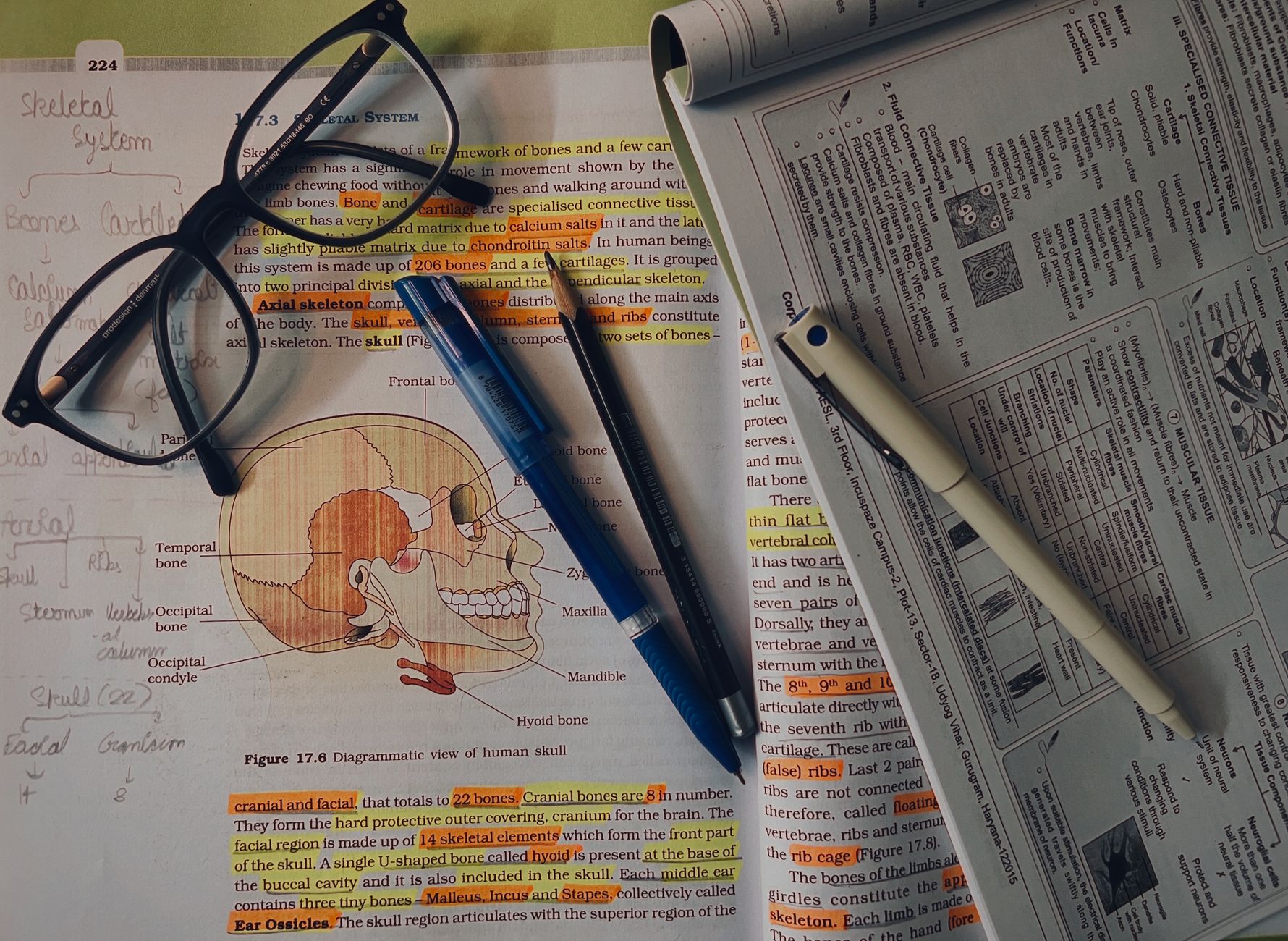
The direct answer: the best AP study plan starts from your fixed May exam date, breaks the course into weekly review blocks, and relies on active recall plus timed practice rather than passive rereading. This guide gives a reusable system you can apply to one AP or to five, with the pacing built so you finish rested rather than depleted.
AP is a trademark of the College Board. StudyInk is not affiliated with or endorsed by the College Board.
AP Study Tips at a Glance
| Question | Answer |
|---|---|
| When are AP exams? | AP exams are administered each May, with a late-testing window the following week. |
| How long should I prep? | Most students do well with 8 to 12 weeks of steady review before the exam. |
| What method works best? | Retrieving material from memory, then checking with practice questions. |
| How many practice exams? | At least two full timed rounds, with review between them. |
| Who runs the program? | The College Board administers AP. Each college sets its own credit rules. |
Start With Your Exam Calendar
Every AP subject has a fixed date set by the College Board. Because the dates are fixed, your calendar is the one thing you cannot move, so build backward from it.
Write each exam date on a single page. Then count the weeks you have left and assign one or two units to each week. A student with AP Biology and AP Calculus, for example, should map both subjects onto the same grid so the heavier weeks are visible early. The AP exam dates guide on this site lays out the full window if you need to confirm a subject you are taking. Seeing the dates in one place is what stops the late-April surprise of three exams in five days.
Use Active Recall, Not Rereading
Rereading a textbook feels productive because the words become familiar. Familiarity is not the same as being able to answer a question on the test. The stronger habit is retrieval: close your notes and write or say what you remember, then check where you were wrong.
A 2013 review by Dunlosky and colleagues rated practice testing and distributed practice among the highest utility study techniques across learners and subjects (Improving Students' Learning With Effective Learning Techniques, Dunlosky et al.). That finding matters for AP because the exam rewards applied recall, not recognition. When you reread, you mistake the ease of seeing the words for knowing the material. Retrieval fixes that by exposing the gaps while there is still time to close them.
How to build a recall loop
Turn each unit heading into a question before you read it. "What drives Hardy-Weinberg equilibrium?" works better than a passive read because it sets up retrieval later. After the block, close the notes and write the answer. Then check. The check step is where learning happens, because it is fast and specific.
Practice With Real AP-Style Questions
AP questions have a specific shape. The multiple-choice sets in science and history are built around stimuli such as graphs, data tables, or primary sources. The free-response prompts use command words like "evaluate," "justify," and "construct." Practicing the format is as important as knowing the content.
Practice testing earned its high rating in the Dunlosky review precisely because it forces retrieval under conditions close to the real test. For AP, that means every week should include some questions answered under light time pressure. A study group where you swap self-made questions with peers adds the retrieval benefit of teaching, which is a different and useful layer on top of solo recall.
Build a Weekly Study Loop
A steady week beats a frantic weekend. Use a simple four step loop for any AP subject.
Step 1: Preview and question
Before you read a unit, turn each heading into a question. "What drives Hardy-Weinberg equilibrium?" works better than a passive read because it sets up retrieval later.
Step 2: Study in focused blocks
Work in 25 to 50 minute blocks with short breaks. The length matters less than protecting the block from interruptions. A phone across the room is worth more than a perfect playlist.
Step 3: Retrieve, then check
After each block, close your notes and write what you remember. Mark the misses and relearn only those, which is far more efficient than rereading the whole chapter.
Step 4: Space it out
Return to the unit the next day, then three days later, then a week later. Spacing is what moves material from short-term memory into something you can still reach in May. A paper planner or a simple reminder can hold this schedule so you are not relying on memory to review memory.
Sample two week plan
Suppose your exam is four weeks out and two units remain weak. Week one: retrieve unit A daily and unit B every other day. Week two: mixed practice pulling A and B together. Week three: one full timed section, then repair the gaps. Week four: light retrieval and one more timed round. Notice there is no all night cram; the earlier weeks do the heavy lifting.

Manage the Load Across Multiple APs
Taking three or more APs at once changes the math. You cannot give every subject equal time in the final two weeks, so rank them by exam date and by current confidence. The subject with the soonest date and the weakest baseline gets the first daily block.
Protect sleep. A tired brain retrieves poorly, and the AP exams are long. You want to walk in rested, not depleted from a cram. The students who burn out in April are usually the ones who tried to hold five equal tracks at full intensity. Ranking is not giving up on a subject, it is allocating limited hours where they change the score most.
Track Progress With a Score Calculator
After a practice round, estimate where you stand with a free AP score calculator. It turns your section performance into a projected 1 to 5, which helps you decide whether to shift time toward a weaker section. The tool does not replace studying, but it shows whether your plan is working. For college planning, the GPA Calculator helps you see how AP weight might affect your overall average.
One caution from the scoring side: the real cut scores are set each year through a research process, so a calculator gives a band rather than a promise (How Are AP Exams Scored? College Board). Use the number to track direction across practices, not as a final verdict.
Common AP Study Mistakes
- Highlighting as a primary method. It marks text but does not build recall.
- Saving practice exams for the night before. You need time to learn from the results.
- Ignoring the free-response rubrics. AP graders reward specific elements; a vague paragraph loses points.
- Studying every subject equally. Rank by date and weakness instead.
- Never checking your score trajectory. A calculator estimate keeps your target honest.
Frequently Asked Questions
How many weeks should I study for an AP exam?
Most students do well with 8 to 12 weeks of steady review. If you have less time, prioritize active recall on the highest weighted units and timed practice.
Is rereading the textbook enough?
Rereading can help you find a detail you missed, but as a main strategy it scores low for long term learning. Pair it with retrieval and practice questions.
How many practice exams should I take?
Aim for at least two full timed rounds with review between them. The first shows your baseline; the second shows whether your plan worked.
Can study groups replace solo study?
No, but they add retrieval through explanation. Use them alongside solo recall, not instead of it.
When are AP exams held?
AP exams are administered each May, with a late-testing window the following week. Each subject has a fixed date set by the College Board.
How do I know which units to prioritize?
Use the official course framework weightings and your own quiz results. A score calculator helps confirm which section is dragging your projected score down.
Sources
About the author
Michael R. spent 12 years as a learning specialist and study skills coach. He writes about the evidence behind study techniques, testing claims like spaced repetition and interleaving against actual student outcomes.