May 22, 2026
Geometry Study Guide: Shapes, Angles, and Proofs
A geometry study guide covering points, lines, angles, triangles, circles, area, volume, and the theorems students meet most often, with worked examples.
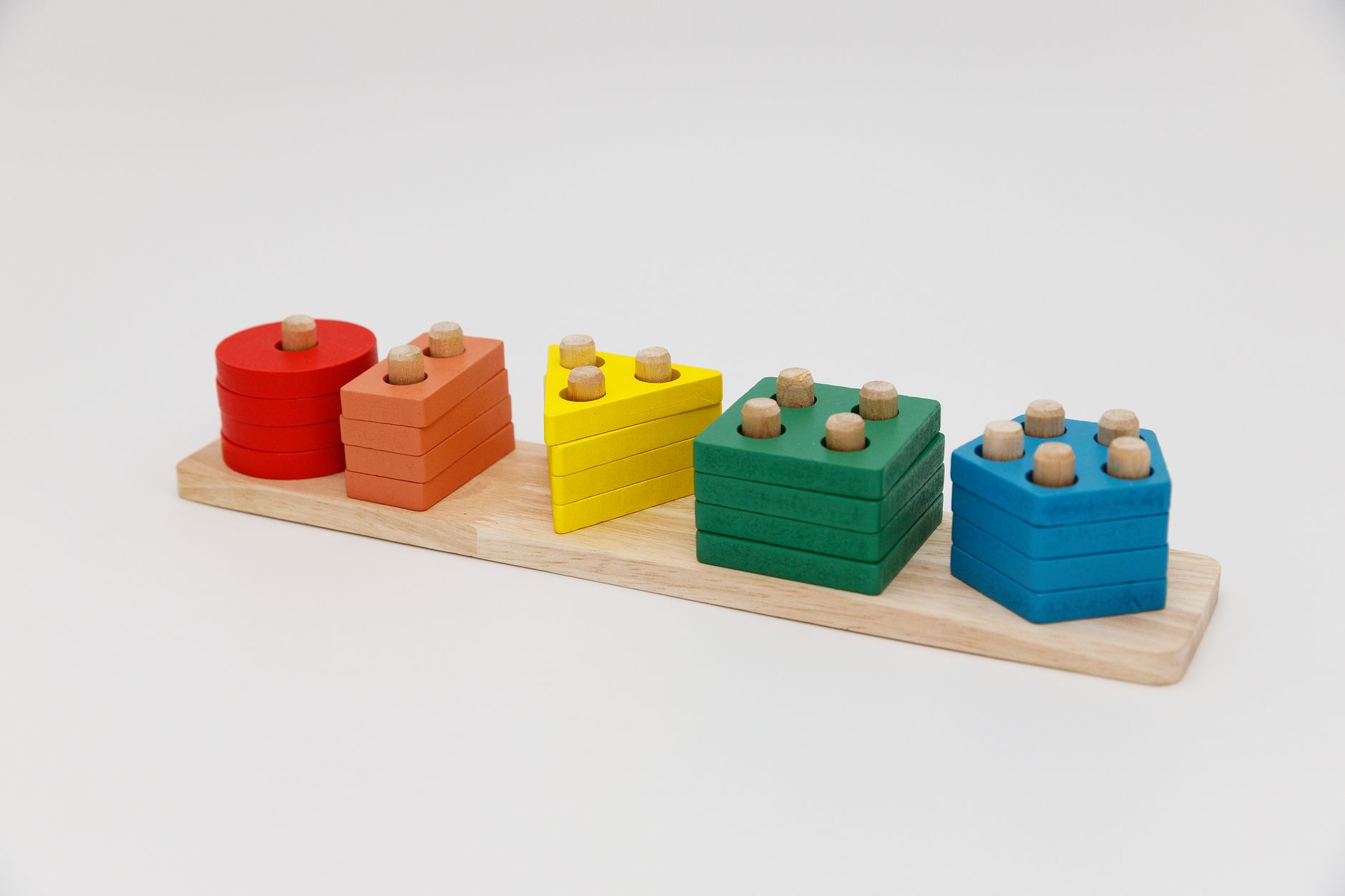
The short answer: geometry is the study of space, shape, and size, from points and lines to triangles, circles, and solids. The most useful skills are measuring angles, finding area and volume, and using a few key theorems. This guide lays out the core ideas with worked examples you can practice today.
Geometry at a Glance
| Object | Key fact |
|---|---|
| Triangle | Angles add to 180 degrees. |
| Right triangle | Follows the Pythagorean theorem. |
| Circle | Area equals pi times radius squared. |
| Rectangle | Area equals length times width. |
| Parallel lines cut by a transversal | Create equal corresponding angles. |
Building Blocks
Everything in geometry starts from a point, which has no size. A line is a straight set of points with no end. A line segment has two endpoints. A ray starts at one point and goes on in one direction.
An angle measures the turn between two rays, in degrees. A full turn is 360 degrees. A right angle is 90 degrees. Two angles that add to 180 degrees are supplementary. Two that add to 90 degrees are complementary. Khan Academy frames these basics as the foundation every later theorem builds on 1.
Triangles
The three angles inside any triangle add to 180 degrees. A triangle with one 90 degree angle is a right triangle. In a right triangle the side opposite the right angle is the hypotenuse, the longest side.
The Pythagorean theorem relates the sides: a squared plus b squared equals c squared, where c is the hypotenuse.
Worked example. A right triangle has legs of 3 and 4. Find the hypotenuse.
3 squared plus 4 squared = 9 + 16 = 25. The square root of 25 is 5, so c = 5.
Triangles are similar when their angles match, even if sizes differ. Similar triangles have side lengths in the same ratio, which is how we solve many real measurement problems. Maths is Fun lays out these triangle rules with diagrams you can copy 2.
Circles
A circle is the set of points a fixed distance (the radius) from a center. The diameter is twice the radius. Key formulas:
- Circumference equals 2 times pi times radius, or pi times diameter.
- Area equals pi times radius squared.
Worked example. A circle has radius 5. Find its area.
Area = pi times 5 squared = pi times 25, about 78.5 square units using 3.14 for pi.
Area and Volume
Flat shapes use area; solid shapes use volume.
- Rectangle area = length times width.
- Triangle area = one half times base times height.
- Rectangular prism volume = length times width times height.
- Cylinder volume = pi times radius squared times height.
Worked example. A box is 4 by 3 by 2. Its volume is 4 times 3 times 2 = 24 cubic units.

Angles From Parallel Lines
When a line crosses two parallel lines, several angle pairs form. Corresponding angles are equal. Alternate interior angles are equal. These facts let you find unknown angles from known ones.
Worked example. Two parallel lines are cut by a transversal. One corresponding angle is 65 degrees. The matching angle on the other line is also 65 degrees.
Proofs
A proof shows why a statement must be true using definitions and earlier results. Most school proofs use triangle congruence: if two triangles match in certain sides and angles (such as side-angle-side), they are congruent, meaning identical in shape and size. Proofs train logical reasoning more than memorization, and that reasoning carries into algebra and beyond.
How to write a proof
- State what you are given and what you must show.
- List each step with the reason (definition, postulate, or earlier result).
- End when the claim follows directly.
A Study Method for Geometry
I have tutored geometry for years, and the students who improve fastest are the ones who draw before they calculate. A sketch turns an abstract sentence into a picture your brain can hold.
Draw everything
Even when a problem gives a diagram, redraw it and label what you know. Trade sketches with a friend and talk through the steps. Explaining your reasoning out loud exposes the gaps a silent solve hides.
Drill the formulas in pairs
Write each formula on one card and a worked example on the back. Test yourself, then swap cards with a friend. Spaced retrieval beats a single long read because the act of recalling the formula is what stores it.
Use timed practice
Once a week, sit a set of mixed problems with the clock running. Timed practice shows whether you actually know the method or merely recognise it. Compare your approach with a classmate so you see more than one path to the answer.
Connect to other maths
Geometry feeds straight into trigonometry and algebra. If angles and ratios feel shaky, the trigonometry basics guide picks up where this one ends, and the word problem guide shows how these formulas appear inside real questions.
Coordinate Geometry
Geometry also lives on a grid. A point is written as (x, y), the distance between two points uses the square root of the sum of squared differences, and the midpoint is the average of the coordinates. The slope of a line is the change in y over the change in x, and parallel lines share a slope while perpendicular lines have slopes that multiply to negative one.
Worked example. Find the midpoint of (2, 4) and (6, 10).
Average x: (2 + 6) / 2 = 4. Average y: (4 + 10) / 2 = 7. Midpoint is (4, 7).
Transformations
Shapes move on the plane in four ways: translation (a slide), reflection (a flip across a line), rotation (a turn about a point), and enlargement (a scale about a centre). Each keeps some property: reflection and rotation preserve size and shape, while enlargement changes size but keeps angles. Drawing the image point by point beats guessing.
Circles on the Coordinate Plane
The circle connects to algebra when you place it on a grid. A circle with centre (h, k) and radius r follows the equation (x minus h) squared plus (y minus k) squared equals r squared. You can read the centre and radius straight from the form, or complete the square to find them when given an expanded equation. This link between shape and algebra is exactly what makes the skill transfer to later maths courses.
Exam day habits
Sketch first, calculate second, and write units on every answer. A short daily diagram beats a long weekly cram. The habit of labelling what you know before you solve is what separates a clean proof from a confused one.
Common Mistakes
- Confusing radius with diameter in circle formulas.
- Forgetting the one half in triangle area.
- Using the Pythagorean theorem on non-right triangles.
- Assuming similar means same size, not just same shape.
- Skipping the diagram, which hides the relationships.
Common Misconceptions
A frequent belief is that proofs are only about memorising theorems. In truth, a proof is a chain of reasons, and you can build it from a small set of rules if you understand why each step holds. Another misconception is that pi is exactly 3.14. It is about 3.14159 and never ends, so 3.14 is only an estimate for classroom work. A third myth is that similar triangles are congruent. Similar means same shape and same angles; congruent means same size too.
Frequently Asked Questions
What is the Pythagorean theorem used for?
It finds a missing side of a right triangle when you know the other two sides.
Why do triangle angles add to 180 degrees?
That is a property of flat, Euclidean geometry, proven by drawing a parallel line through one vertex.
What is the difference between area and volume?
Area measures a flat surface in square units. Volume measures space inside a solid in cubic units.
Are similar triangles the same as congruent triangles?
No. Similar triangles share angles and side ratios. Congruent triangles are identical in size and shape.
When do students study geometry?
Typically in grade 8 through 10, with formal proofs often in grade 9 or 10.
Is pi exactly 3.14?
No. Pi is about 3.14159 and continues without repeating. Use 3.14 for estimates.
About the author
Marcus B. coached competition math for a decade and scored a perfect 800 on SAT Math. He writes teardowns of test question design, showing students the pattern behind the problem instead of the problem itself.