July 1, 2026
How to Study Chemistry: A Practical System
How to study chemistry: practice problems daily, learn equations by using them, and master units and significant figures.
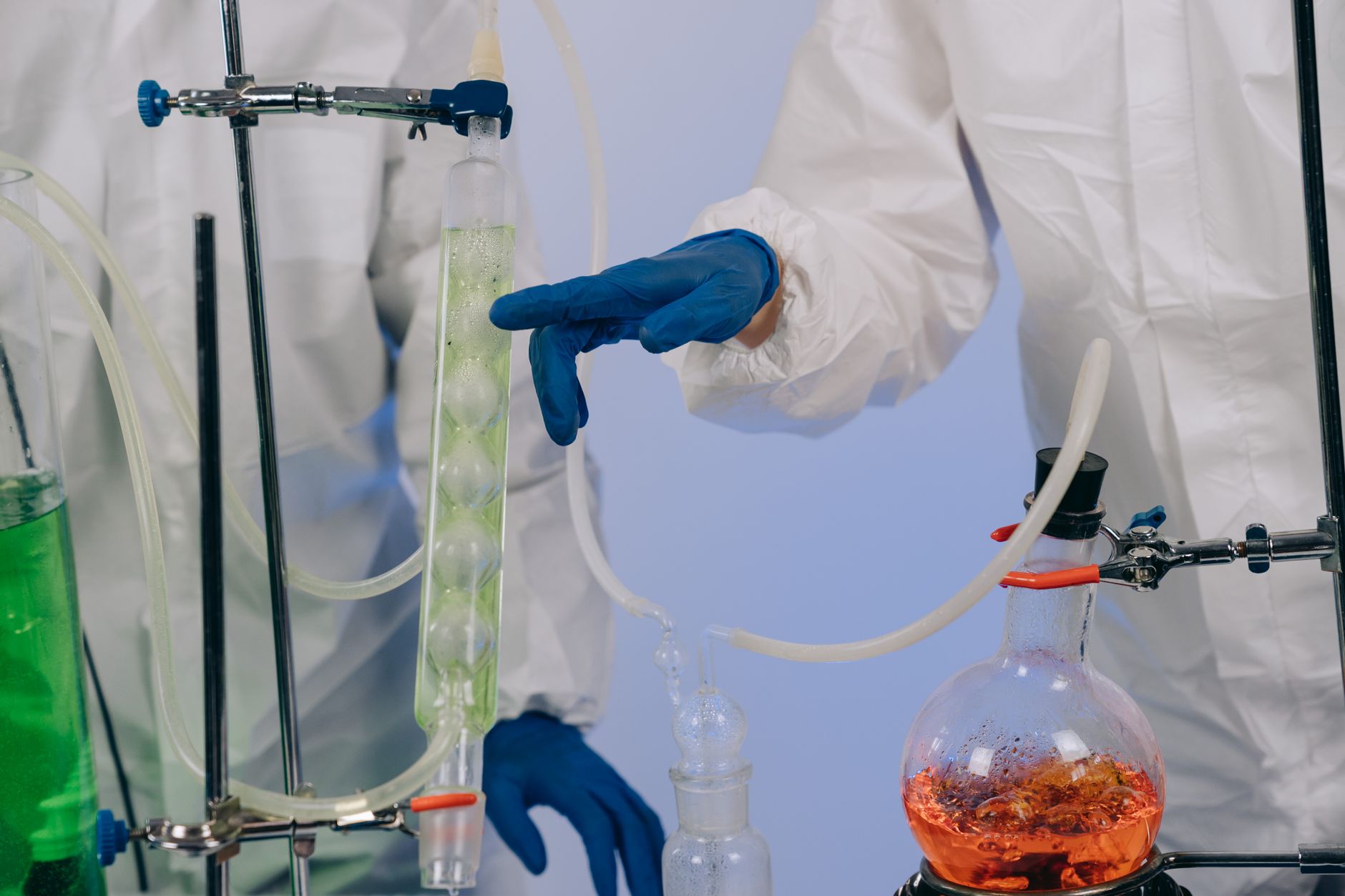
The most useful answer to "how to study chemistry" is to practice solving problems every day and to learn the equations by using them, not by reading them. Chemistry rewards repetition and clear steps more than almost any other school subject. This guide gives a routine you can apply from introductory chemistry through AP Chemistry.
Chemistry at a Glance
| Question | Answer |
|---|---|
| What skill matters most? | Solving problems with the right equation and units. |
| Best study method | Worked examples plus immediate self-check. |
| How to learn equations | Derive and reuse them, do not just memorize. |
| Common weak spot | Units and significant figures. |
| Daily time needed | 30 to 45 minutes of problem work. |
| Best aid for stuck problems | A step by step explanation of the rule involved. |
Why Chemistry Needs a Different Approach
Chemistry is built on a small set of rules applied to many cases. The periodic table, the mole, balancing equations, and the gas laws show up again and again. Once you learn the pattern, a new problem is just the same pattern with different numbers.
Reading a chemistry chapter feels productive and often is not. You only know the material when you can start a problem from a blank page and reach the right unit at the end. That is why daily problem work beats rereading.
Learn the Equations by Using Them
Do not copy an equation onto a card and hope it sticks. Instead, write the equation, then solve three problems with it. For the ideal gas law, PV = nRT, work a problem for pressure, one for volume, and one for moles. Each use shows you how the pieces move.
When you can, derive the formula from a definition. Molarity is moles per liter, so M = n / V. Starting from the words makes the symbol obvious and helps you rebuild it during a test when your memory slips. The fundamentals are well covered in free references such as Khan Academy Chemistry and the Royal Society of Chemistry.
Master Units and Significant Figures
Most lost points in chemistry come from units, not from the idea. Train yourself to write the unit on every line, not just the final answer. If you are finding mass, the unit should be grams at each step. A wrong unit is a signal that a conversion is missing.
Significant figures follow fixed rules: count digits from the first nonzero number, keep trailing zeros only when the decimal point is shown, and round only at the final step. Practicing this on every problem removes a whole category of avoidable errors.
Build a Reaction Playbook
Group reactions by type so you recognize them fast.
- Synthesis: two substances combine into one, such as 2H2 + O2 to make 2H2O.
- Decomposition: one substance breaks into two, such as 2H2O split by electricity into 2H2 + O2.
- Single replacement: one element trades places in a compound.
- Double replacement: two compounds swap partners, often forming a precipitate or water.
- Combustion: a fuel reacts with oxygen and releases carbon dioxide and water.
Balancing is then a routine: count atoms on each side, adjust coefficients, and check the charge on redox reactions. Write the playbook once, then drill it.
Use Active Recall for Definitions
Terms like "mole," "electronegativity," and "catalyst" need the same flashcard treatment as biology vocabulary. One card, one definition, one example. A mole is 6.022 times 10 to the 23rd particles, the number of atoms in exactly 12 grams of carbon-12. The example ties the abstract count to a real mass.
Review these on a spaced schedule so the words stay ready while you focus problem sessions on math.
Common Misconceptions
- Reading instead of solving. You learn chemistry by working, not by watching.
- Dropping units mid-problem. Write the unit on every line.
- Rounding too early. Keep extra digits and round only at the end.
- Memorizing equations without using them. Three solved problems beat ten readings.
- Skipping the periodic table trends. Electronegativity and atomic radius explain why reactions behave as they do.
Frequently Asked Questions
How much math is in chemistry?
A lot of arithmetic and algebra. You need to rearrange equations, convert units, and keep track of exponents. Strong arithmetic saves points.
What should I do if I am stuck on a problem?
Write what you know, the unit you need, and the equation that links them. If the path is still unclear, ask for a step by step explanation that names the rule, then redo the problem on your own.
How do I remember all the equations?
Use each one on several problems and derive the simple ones from definitions. Active use builds recall faster than a list on the wall.
Are flashcards useful in chemistry?
Yes for definitions and trends. They will not replace problem solving, which is where most exam points sit.
Why do my answers come out with the wrong unit?
Usually a conversion was skipped or the equation was used with the wrong quantity. Writing units on every line makes the gap visible.
Can a study tool replace my textbook?
No. Use the textbook for assigned reading and a tool for daily retrieval practice and step by step help when you are stuck. The recall still has to be yours.
About the author
Jennifer P. taught AP Chemistry for 8 years and specialized in the equilibrium and thermodynamics units that kill scores. She writes about the specific conceptual errors that cost students points, and the drills that fix them.