July 7, 2026
How to Study for a Geometry Exam: A Practical Plan
Learn how to study for a geometry exam with the core area and volume formulas, triangle and circle theorems, proof practice, and a one week review schedule that works.
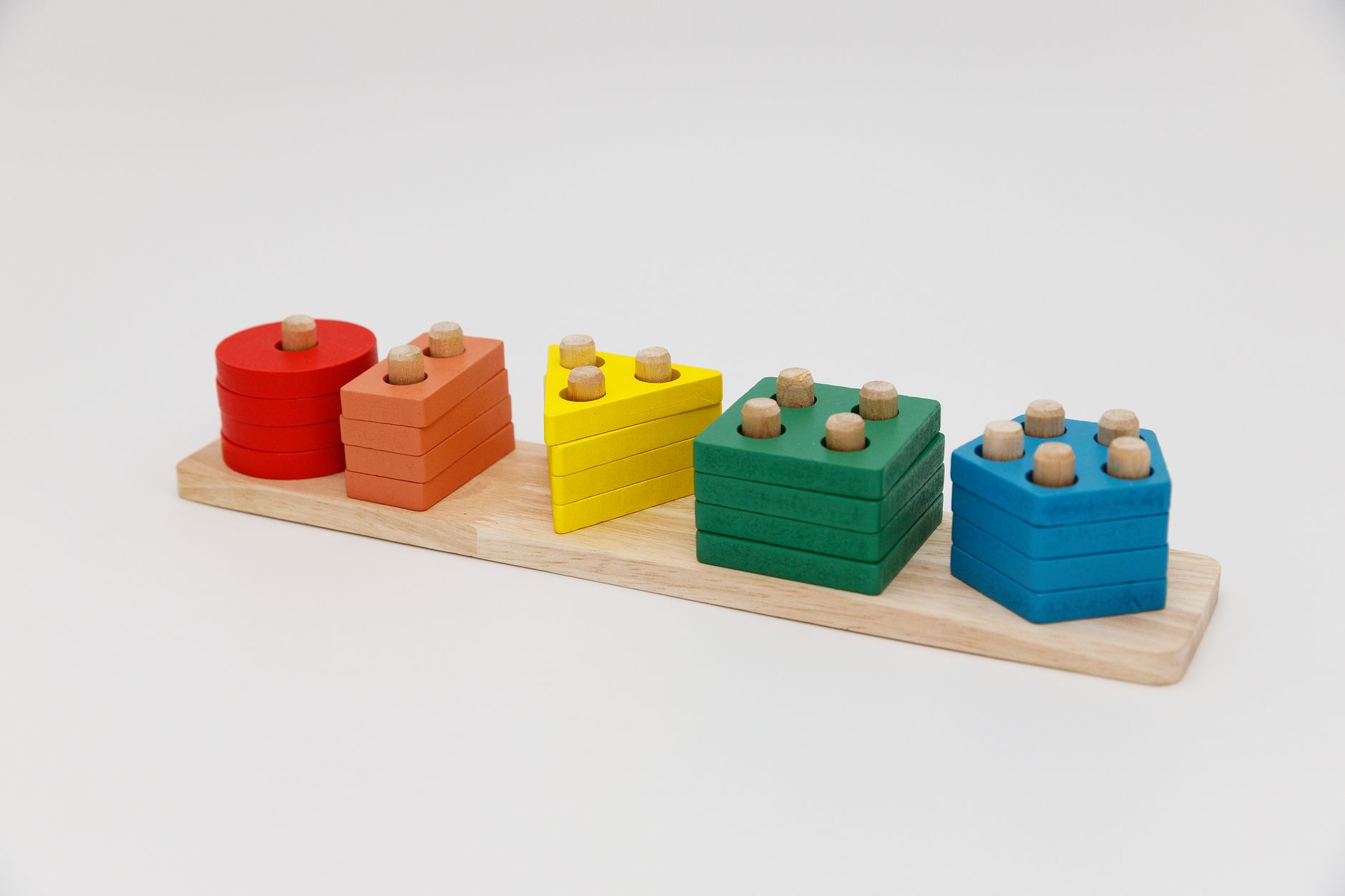
The most reliable way to study for a geometry exam is to drill the core formulas for area, volume, and angles, practice triangle congruence and circle theorems until they are automatic, write proofs from definitions rather than memorized answers, and then take timed mixed sets. Geometry rewards a different kind of memory than algebra does. You are not solving one equation, you are holding a web of facts and deciding which one applies to the shape in front of you.
Geometry Exam at a Glance
| Category | Details |
|---|---|
| What gets tested most | Triangles, circles, area, volume, and proofs. |
| The one formula you cannot avoid | The Pythagorean theorem for right triangles. |
| Are proofs still required | In many courses yes, so the logic matters more than the answer. |
| Best review style | Mixed problem sets, not one topic at a time. |
| Where students lose points | Radius versus diameter, missing the reason in a proof step. |
Lock Down the Core Formulas First
Before any problem solving, write a single page of the formulas you must know by heart. I tell my students to memorize the shape, not the letter soup.
- Triangle area equals one half times base times height.
- Rectangle area equals length times width.
- Circle area equals pi times radius squared.
- Circle circumference equals 2 times pi times radius.
- Rectangular prism volume equals length times width times height.
- Cylinder volume equals pi times radius squared times height.
- Sphere volume equals four thirds times pi times radius cubed.
Worked example. A triangle has base 8 and height 5. Its area is one half times 8 times 5, which gives 20 square units. The trap here is forgetting the one half, which turns 20 into a tempting 40.
A 2013 review of ten common study techniques by Dunlosky and colleagues rated practice testing and distributed practice as the highest utility methods, while rereading and highlighting scored low because they do not reliably build recall (Association for Psychological Science). For geometry that means you should be solving problems from memory, not rereading your notes with a highlighter.
Master Triangles Before Anything Else
The angles inside any triangle add to 180 degrees. In a right triangle, the Pythagorean theorem gives a squared plus b squared equals c squared, where c is the hypotenuse. That single relationship appears across triangles, coordinate geometry, and even trig.
Triangle congruence shortcuts let you prove two triangles identical in size and shape:
- SSS: all three sides match.
- SAS: two sides and the included angle match.
- ASA: two angles and the included side match.
- AAS: two angles and a non included side match.
Similar triangles share angles and have proportional sides, which is how you solve indirect measurement problems such as finding the height of a tree from its shadow.
Learn the Circle Theorems as a Short List
Circles bring a fixed set of facts that repeat on nearly every exam:
- A radius meets a tangent at a right angle.
- The angle at the center is twice the angle at the circumference subtended by the same arc.
- Angles in the same segment are equal.
- Opposite angles in a cyclic quadrilateral add to 180 degrees.
Worked example. If an inscribed angle intercepts an arc of 80 degrees, the angle measures 40 degrees, because it is half the arc. Students miss this when they forget which angle is the big one and which is the small one, so always label the center angle and the circumference angle separately.
Practice Coordinate Geometry
Coordinate geometry mixes algebra and shapes. The tools you need:
- Distance between (x1, y1) and (x2, y2) equals the square root of ((x2 minus x1) squared plus (y2 minus y1) squared).
- Midpoint equals the average of the x coordinates and the average of the y coordinates.
- Slope equals (y2 minus y1) divided by (x2 minus x1).
Parallel lines have equal slope. Perpendicular lines have slopes that are negative reciprocals. I have watched strong algebra students lose a coordinate question because they wrote the slope of a perpendicular line as the same number instead of its negative reciprocal.
Write Proofs From Definitions, Not Memory
A proof starts from given facts and definitions and reaches a conclusion through accepted steps. Most school proofs use triangle congruence or parallel line angle facts. The part students skip is stating the reason for each line, not just the statement.
The van Hiele model of geometric thinking describes how students move from recognizing shapes by appearance to constructing formal proofs (Ohio Department of Education). Proof writing sits at the deduction level, where you understand why axioms, definitions, and theorems connect. You cannot reach that level by memorizing a finished proof. You reach it by rebuilding proofs from the givens.
My approach:
Step 1: List the givens and the goal
Write three things at the top of every proof: what you are given, what you must prove, and a sketch. A labeled diagram prevents false assumptions about which sides are equal.
Step 2: Find the gap
Ask what sits between the givens and the goal. If you must prove two triangles congruent, check which standard method your givens support. A few seconds of planning saves a page of wrong turns.
Step 3: Build the chain backward
Start from the goal and work toward the givens. Ask what would let you claim the final statement, then what would let you claim that, until you land on something already given. Then write the chain forward, each line tied to a reason.
Step 4: Rebuild from memory
Close your notes and rebuild a proof you studied earlier. If you stall, that stall is the exact spot to study again. Spaced rebuilds across several days beat one long session.
Build a One Week Schedule
- Day 1: Area and perimeter drills.
- Day 2: Triangles and the Pythagorean theorem.
- Day 3: Circles and their theorems.
- Day 4: Coordinate geometry.
- Day 5: Proofs from start to finish.
- Day 6: Mixed timed quiz, then fix weak spots.
- Day 7: Light review of the items you missed.
The testing effect, studied by Roediger and Karpicke in 2006, shows that pulling information from memory strengthens it far more than restudying does (Psychological Science). For geometry, that means every mixed set should be done closed book before you check the answer key.
Common Misconceptions
- Confusing radius with diameter in circle formulas. The diameter is twice the radius, and using it in place of r breaks every circle equation.
- Forgetting the one half in triangle area. This single omission doubles your answer.
- Using the Pythagorean theorem on non right triangles. It only works when you have a right angle.
- Mixing up congruence and similarity. Congruent means identical in size and shape. Similar means same shape, different size.
- Skipping the reason in a proof step. A statement with no linked reason is not a proof.
- Believing memorized proofs transfer. The test gives a different diagram, so you need the reasoning, not the final lines.
Frequently Asked Questions
What is the most important geometry formula?
The Pythagorean theorem, because it connects side lengths in right triangles and shows up across triangles, coordinate geometry, and later topics.
How do I get better at proofs?
Write them daily from definitions, then compare your reasoning with a model solution. Focus on the reason for each line, not just the final statement.
Are circles hard on exams?
They can be, yet the theorems repeat, so a short memorized list covers most questions. Label the center angle and the circumference angle to avoid confusion.
Should I memorize formulas or use a sheet?
Know the core ones by heart. A reference sheet may not include everything your teacher tests, and you lose time flipping to it under pressure.
How is geometry used later?
It underpins trigonometry, calculus, and physics, so the basics pay off in later courses.
What is the fastest way to review the week before?
Take timed mixed sets closed book, then rebuild only the problems you missed. Spacing the review across the week beats one long cram.
About the author
Marcus B. coached competition math for a decade and scored a perfect 800 on SAT Math. He writes teardowns of test question design, showing students the pattern behind the problem instead of the problem itself.