July 26, 2026
How to Understand the Scientific Method: A Practical Guide
Learn the scientific method: ask a testable question, form a hypothesis, run a controlled test, and draw a conclusion from evidence.
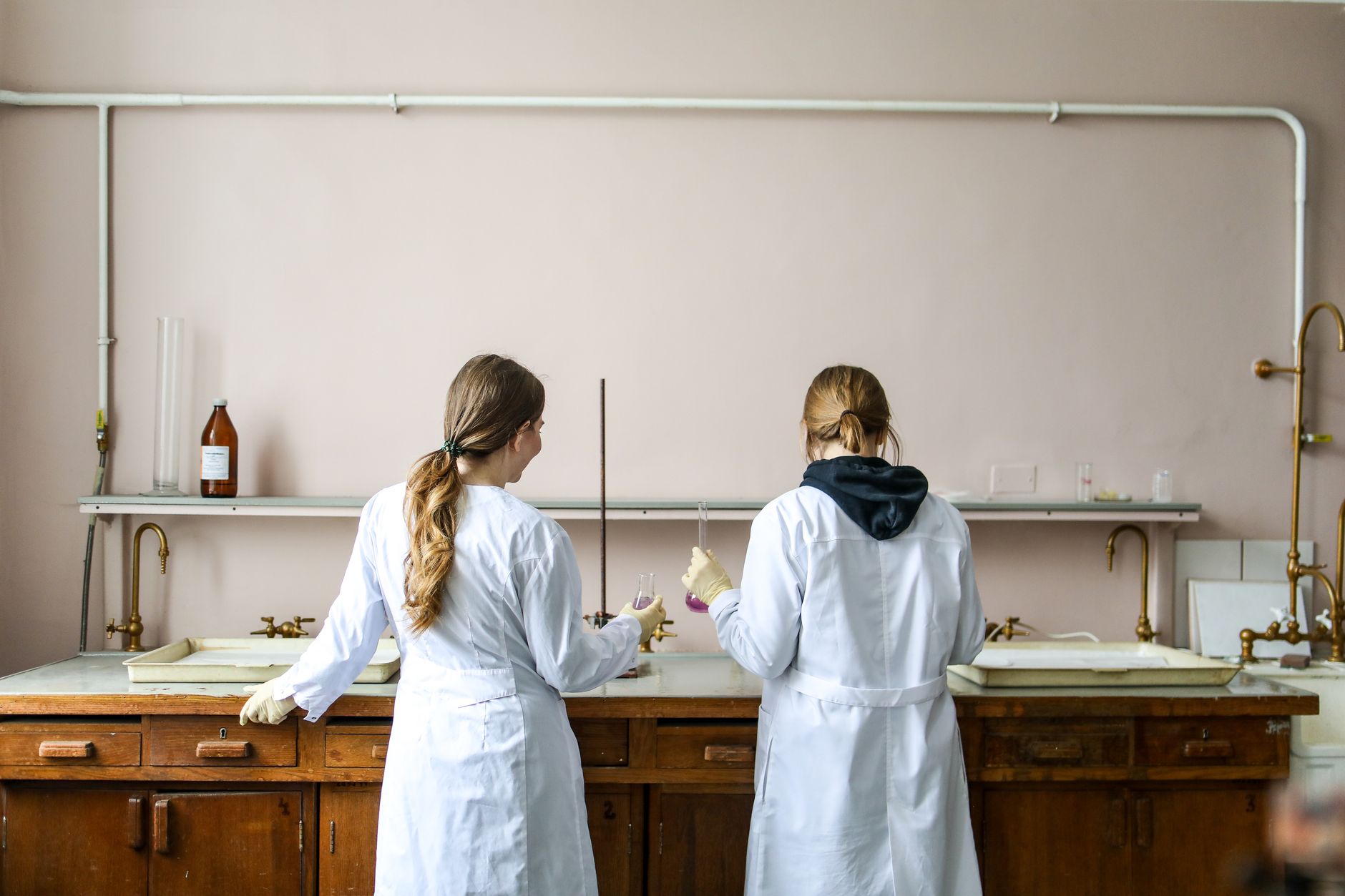
The direct answer: the scientific method is a repeatable process of asking a testable question, forming a hypothesis, running a controlled test, and drawing a conclusion from the evidence. This guide explains each step and shows how to design a fair test you could actually run.
The Scientific Method at a Glance
| Question | Answer |
|---|---|
| What is it? | A process for testing ideas with evidence. |
| What is the first step? | Observe and ask a clear, testable question. |
| What is a hypothesis? | A testable prediction, often stated as an if-then statement. |
| What makes a fair test? | Changing one variable while controlling the rest. |
| Does it end? | No, conclusions lead to new questions and tests. |
Observe and Ask a Question
The method starts with observation. You notice something, gather background information, and turn it into a question. A good question is specific and testable, such as "How does light intensity affect the rate of photosynthesis?" Vague questions like "Why are plants weird" are harder to test because there is no clear way to measure the answer.
Do background research
Before forming a hypothesis, learn what is already known. This keeps you from repeating old work and helps you build a reasoned prediction. Reading summaries of prior work supports this step, and it is where most science fair projects either get stronger or stall. The University of California Museum of Paleontology runs an "Understanding Science" resource that maps how real inquiry moves between observation, testing, and revision Understanding Science. A half hour of background reading before you commit to a hypothesis saves weeks of testing a question someone already answered.
Form a Testable Hypothesis
A hypothesis is a proposed explanation you can test. It is often written as an if-then statement linking the independent variable to the dependent variable. "If light intensity increases, then the photosynthesis rate increases, because more light drives the light dependent reactions." The hypothesis must be falsifiable, meaning evidence could show it wrong.
Prediction versus hypothesis
The hypothesis is the explanation. The prediction is the specific result you expect to observe if the hypothesis is true. Both guide the experiment. A clear prediction is what lets you design a measurement in advance, which protects you from quietly changing the claim after you see the data.
Design a Controlled Experiment
An experiment tests the hypothesis by changing one variable and measuring its effect. The independent variable is what you change. The dependent variable is what you measure. Controlled variables are kept the same so they do not confuse the result.
Use a control group
A control group receives no experimental treatment and gives you a baseline for comparison. For example, a plant kept in the dark while others get light shows what happens without the variable you are testing. Without that baseline, you cannot tell whether your treatment caused the effect or whether something else did.
Collect and Analyze Data
Run the experiment with repeated trials and record results. Data can be quantitative, such as measurements, or qualitative, such as descriptions. Organize it into tables and graphs to reveal patterns. Statistical checks help you decide whether a result is likely real or due to chance.
Draw a conclusion
Compare the data to your prediction. If the evidence supports the hypothesis, you report it. If not, you revise the hypothesis and test again. A single result is rarely the final word, which is why the process repeats. In my classes I push students to write the conclusion before they trust the result: "What would it take to change my mind?" That question exposes weak methods early.
Communicate and Repeat
Scientists share results so others can review and reproduce them. Publication and peer discussion strengthen findings. Even a supported hypothesis is tested further, because the method never truly ends. Replication by other labs is what turns one promising result into accepted knowledge.
The wider research community depends on this sharing. When a result cannot be reproduced, that is not a failure of science but science working as designed, because the method is built to correct itself over time. A single study, however clean, remains a single observation until others confirm it. This is why teachers ask for several sources rather than one: confidence grows with independent agreement, not with a single confident claim.
A note on fields without experiments
Not every science runs lab experiments. Astronomy observes rather than manipulates, and much of climate science works from models and long term records. The spirit stays the same: form an idea, gather evidence, and let the evidence decide. The method is a habit of disciplined thinking, not a rigid script.
A Full Worked Example
Put the steps together with a concrete question: does the type of fertilizer affect the height of tomato plants?
- Observation: One bed of tomatoes grew taller than another.
- Question: Does fertilizer brand affect final plant height?
- Research: Past trials suggest nitrogen content matters.
- Hypothesis: If plants receive high nitrogen fertilizer, then they grow taller, because nitrogen drives leaf and stem growth.
- Prediction: High nitrogen plants will average more centimeters after six weeks than low nitrogen plants.
- Experiment: Grow two groups under the same light, water, and soil, varying only the fertilizer. One group is the treatment, one is the control with no fertilizer.
- Data: Measure height weekly for six weeks, average the results.
- Conclusion: If the high nitrogen group is taller by a meaningful margin across repeated trials, the hypothesis holds. If not, revise the hypothesis, perhaps testing a different nutrient or a different plant.
- Communicate: Write the method so another student could repeat it exactly.
This single example shows why each step exists. Drop the control and you cannot tell fertilizer from good soil. Change the water too and you cannot tell which factor mattered. The method is guardrails against self deception.
Common Variable Mistakes
Even students who know the definitions slip when designing their own test. Watch for these.
The confounding variable
You change the fertilizer and the watering at the same time, then credit the fertilizer when the plant grows. The water was a confound, an uncontrolled factor that could explain the result. A fair test changes one thing.
The placebo gap
In medicine and psychology, a control that gets nothing at all may behave differently only because it expects nothing. A proper control often receives a placebo, an inert stand in, so the only difference is the active treatment. The same logic appears in education studies when a new method is compared against "business as usual."
Sample size and bias
Testing on two plants tells you almost nothing, because one might just be a stronger seed. Larger, randomly chosen samples reduce the chance that a result is luck. This is why a single dramatic finding, however tidy, is never the end of the method.
Common Misconceptions
- Asking a question that cannot be tested.
- Changing more than one variable at a time.
- Treating a hypothesis as a fact before testing.
- Ignoring repeated trials and variation.
- Stopping after one result instead of iterating.
- Believing a theory is "just a guess." A theory is a well supported explanation, not a hunch.
Frequently Asked Questions
What are the main steps of the scientific method?
Observe and question, research, form a hypothesis, experiment, analyze data, draw a conclusion, and share results. Some lists combine or split steps, but the flow is similar.
What is the difference between a hypothesis and a theory?
A hypothesis is a testable prediction for a specific question. A theory is a well supported explanation built from extensive evidence across many tests.
Why must only one variable change?
If several change at once, you cannot tell which one caused the result, so the experiment is not a fair test.
Is the scientific method a strict fixed order?
It is a flexible guide. Some fields, such as astronomy, rely on observation more than experiment, but the goal of testing ideas with evidence stays the same.
What is a control group?
It is the group that does not receive the experimental treatment, giving a baseline to compare against.
Why are repeated trials important?
Repeats account for random variation and show whether a result is consistent or just luck in a single run.
About the author
Michael R. spent 12 years as a learning specialist and study skills coach. He writes about the evidence behind study techniques, testing claims like spaced repetition and interleaving against actual student outcomes.